The Agricultural Model of a Developed India: Cow-Based Natural Farming and a Healthy Way of Life – Rajendra Shukla
Under the leadership of Prime Minister Shri Narendra Modi, India today is advancing along a path of development where economic progress is harmonized with environmental conservation, public health, and cultural values. Within this holistic vision, Indian agriculture too is being guided toward a new era. For centuries, agriculture has been the backbone of our civilization. In the modern age, however, excessive dependence on chemical fertilizers and synthetic pesticides has not only increased the cost of cultivation but has also gravely impaired soil fertility, its water-retention capacity, and long-term sustainability. As a consequence, the quality of our food and the health of our citizens have also been adversely affected.
Prime Minister Modi has repeatedly emphasized that solutions to India’s challenges lie embedded within our own traditions and indigenous knowledge systems. It is from this very conviction that natural farming is receiving national encouragement, as it is intrinsically connected to the original soul of Indian agriculture. Today, there is a compelling need to view agriculture not merely from the standpoint of production, but within the broader framework of health, sustainability, and self-reliance.
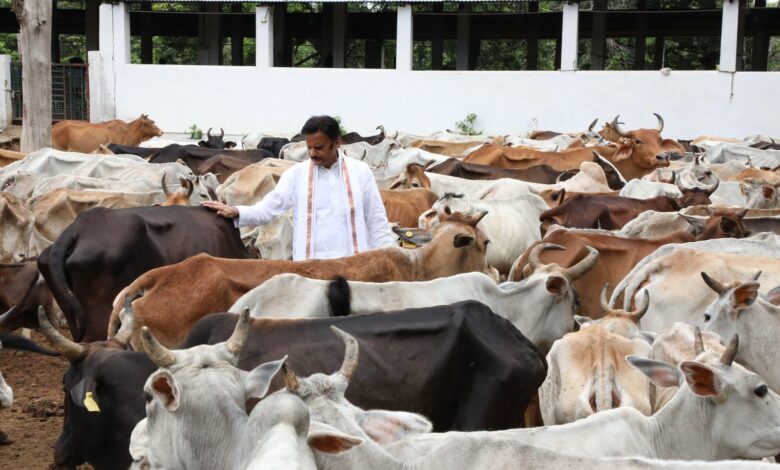
India’s traditional agricultural system has been founded upon coexistence and balance, with the cow occupying a central role. The cow is not merely a religious symbol, but a cornerstone of the rural economy, agricultural productivity, and nutritional security. Our ancestors understood that the protection of cattle is directly linked to the health of the soil. Cow dung and cow urine nourish the land, activate beneficial microorganisms, and restore vitality to the soil. Grain produced from healthy soil is more nutritious, safer, and better aligned with the needs of the human body.
Natural Farming: Not Merely an Agricultural Technique, but a Way of Life
In the vision of Prime Minister Modi, natural farming is not simply an agricultural technique; it is an Indian way of life. He regards it as a powerful means to reduce farmers’ costs, enhance their incomes, and liberate them from external dependencies. Simultaneously, it offers the nation a pathway to chemical-free, toxin-free food. For this very reason, natural farming has been integrally linked with the goals of Atmanirbhar Bharat and a Viksit Bharat.
The methodology of natural farming is simple, indigenous, and highly effective. It necessitates the development of gaushalas not merely as centers of protection, but as economic hubs for the production of agricultural inputs. Natural formulations such as Jeevamrit, Beejamrit, and Panchagavya, prepared from cow dung and cow urine, activate soil microorganisms and enhance fertility over the long term. Techniques such as mulching help retain soil moisture, contribute to water conservation, and protect crops from the adverse effects of climate change. These practices significantly reduce cultivation costs, making the objective of zero-budget natural farming practically attainable.
Prosperity through Cooperation and Institutional Strength
The guidance of the Union Home and Cooperation Minister, Shri Amit Shah, has been of immense importance in transforming natural farming into a mass movement. Under his vision of “Prosperity through Cooperation,” farmers practicing natural farming are being organized and Farmer Producer Organizations (FPOs) are being strengthened. This ensures that small farmers not only receive natural seeds and inputs at affordable rates, but also gain access to markets and remunerative prices for their toxin-free produce. The confluence of cow-based natural farming and cooperative structures represents a new pathway to rural prosperity.
The significance of natural farming extends far beyond the fields; it is directly connected to human health and lifestyle. Lifestyle-related diseases are rising at an alarming pace today, and a major contributing factor is food contaminated with chemical residues. Pure and toxin-free grains obtained through natural farming strengthen the digestive system, enhance immunity, and improve long-term health. Prime Minister Modi’s efforts to give global recognition to Yoga and AYUSH are part of this integrated vision of health. Yoga, pranayama, and a balanced daily routine can yield their full benefits only when the food consumed is pure and natural. Together, natural farming, wholesome food, and yoga realize the vision of a healthy India.
Prime Minister Modi’s practical mantra—“one acre, one season”—serves as a source of inspiration for farmers to adopt natural farming. By beginning on a small scale, farmers can observe results without risk and then gradually expand. Under the National Mission on Natural Farming, the central government is providing robust institutional support in the form of training, technical guidance, availability of inputs, and market linkages. Farmer Producer Organizations play a pivotal role in this direction by empowering small and marginal farmers through collective strength. Notably, women farmers are playing a leading role in this transformative process.
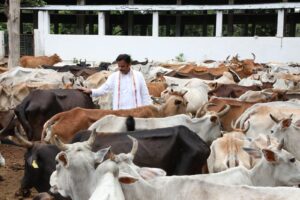
At the heart of this entire endeavor lies cow service (gau-seva). The conservation and promotion of cattle is not merely a matter of faith, but one intrinsically linked to environmental protection, rural employment, and public health. In Prime Minister Modi’s vision, cow-based natural farming is a powerful instrument for strengthening rural India and ensuring sustainable development. The Government of Madhya Pradesh is fully committed to translating this farsighted vision into reality. In the state, natural farming, cattle conservation, and farmer welfare are being advanced in an integrated manner. Our objective is not merely to increase production, but to safeguard the health of the soil, the farmer, and the consumer alike.
Cow-Based Natural Farming: The Renaissance of the Indian Worldview
Cow-based natural farming is not merely an agricultural reform; it is the renaissance of the Indian worldview. By fulfilling our cultural responsibility toward the protection of the cow and the soil, we can ensure healthy food, a balanced lifestyle, and a secure future for coming generations. This is the most potent pathway to realizing Prime Minister Shri Narendra Modi’s vision of a developed, self-reliant, and healthy India.