Cerebrospinal fluid may help estimate the time of death
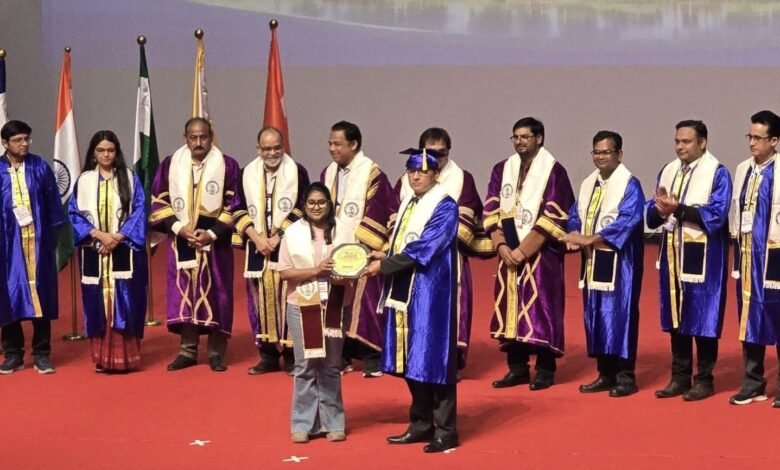
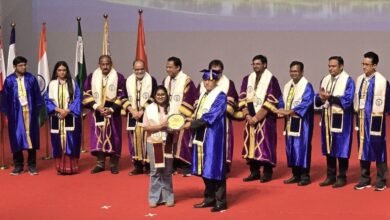
AIIMS Bhopal postgraduate student Dr. Pushpanjali T. (MD, Forensic Medicine and Toxicology) has been honoured at a national-level research competition.
• Her research, titled “Can Cerebrospinal Fluid Reveal the Time of Death?”, explored the possibility of estimating the time elapsed since death (Postmortem Interval).
• She received this recognition at the 7th Science Conclave-cum-National Biomedical Research Competition (NBRCOM 2026).
• The study, conducted at AIIMS Bhopal on 100 medicolegal autopsies, analysed the CT radiodensity and biochemical parameters of cerebrospinal fluid (CSF).
• The research concluded that CSF radiodensity and biochemical parameters, particularly the sodium-potassium ratio, may serve as useful supplementary tools for estimating the time elapsed since death
Can cerebrospinal fluid reveal the time of death? AIIMS Bhopal postgraduate student honored at National Research Competition Dr Pushpanjali T, a postgraduate student (MD Forensic Medicine and Toxicology) at AIIMS Bhopal, has been recognised at a national-level research competition for a study on whether cerebrospinal fluid can help estimate the time of death. Her research was titled “Can cerebrospinal fluid tell the time of death? A combined CT Radiodensity and Biochemical Study: An autopsy-based Study.” She received the recognition at the 7th Science Conclave-cum-National Biomedical Research Competition (NBRCOM 2026), a national academic event held in hybrid (in-person and online) mode. It was organised by the Society of Young Biomedical Scientists (SYBS), India, in collaboration with AIIMS Nagpur.
Dr Pushpanjali’s research addresses a difficult question in forensic medicine: how can one accurately estimate the time that has passed since death? Known as the postmortem interval, this is a crucial link in forensic investigations, yet even experts often find it challenging to estimate. For the public, its importance lies in the fact that determining the time of death correctly can help the course of justice in medico-legal cases. It is a pioneering institutional research initiative of its kind at AIIMS Bhopal. The study examined the usefulness of cerebrospinal fluid (CSF), the fluid found in the deep cavities of the brain and around the spinal cord, as an aid in estimating the time of death. The Departments of Forensic Medicine and Toxicology, Radiodiagnosis (medical imaging) and Biochemistry worked together on the study.
This cross-sectional (conducted at a single point in time) autopsy-based study was carried out on 100 medico-legal autopsies in the Department of Forensic Medicine and Toxicology, AIIMS Bhopal, in which the time of death was documented. CSF was collected directly under vision from the lateral ventricles of the brain, and its radiodensity (the extent to which it blocks X-rays) was measured through CT imaging. Biochemical parameters such as potassium, sodium, lactate, creatinine and lactate dehydrogenase (LDH) were analysed using an automated biochemical analyser. The researchers concluded that CSF radiodensity, together with CSF biochemistry, particularly the sodium-potassium ratio, may serve as a useful aid in estimating the time elapsed since death. Among all the parameters examined, these showed the strongest association with the postmortem interval.
The study was a collective institutional effort, with Dr Raghvendra Kumar Vidua and Dr Niranjan Sahoo from the Department of Forensic Medicine and Toxicology, Dr Ankur Patel from the Department of Radiodiagnosis, and Dr Ashok Kumar from the Department of Biochemistry playing key roles.
This interdisciplinary research initiative reflects AIIMS Bhopal’s commitment to scientific innovation, collaborative research and exploring relatively uncharted areas of forensic science. It also shows that combining advanced radiological imaging with biochemical analysis can help develop new scientific methods for medico-legal investigation. The recognition received by Dr Pushpanjali T at this national-level competition is a significant academic achievement for the institute, and it also highlights the research capabilities of the postgraduate students and faculty members of AIIMS Bhopal.