

The National Institute of Fashion Technology (NIFT) Bhopal organized “Anuttara – Craft Bazaar 2026,” a five-day celebration of India’s traditional crafts and artisan communities from February 24 to February 28, 2026. The first three days (February 24–26) were held at the NIFT Bhopal campus as an Artisan Awareness Week, followed by a two-day public exhibition-cum-sale (February 27–28) at Gauhar Mahal.
Derived from Sanskrit, Anuttara means “incomparable,” symbolizing the uniqueness and authenticity of handmade traditions passed down through generations.
The event was inaugurated on campus on February 24th by Akhil Sahai, Director, NIFT Bhopal. Addressing the gathering, the Chief Guest Shri Ajay K. Bhattacharya, IFS (R), appreciated the institute’s efforts in creating meaningful collaborations between artisans and young designers. The inaugural ceremony featured a formal introduction of all 66 participating artisans representing craft clusters from Jaipur–Sanganer, Chanderi, Bhopal, Jabalpur, Neemuch, Jobat, Indore, Ujjain, Benaras, Maheshwar, and Khajuraho.
– Artisan Awareness Week (February 24–26 | NIFT Campus)
The three-day Artisan Awareness Week was structured to provide artisans with academic exposure and professional development.
Day 1: Market Orientation and Policy Awareness
Sessions focused on evolving market dynamics and government support systems. The Vision NXT session by Dr. Supriya Yadav, Associate Professor of Fashion and Lifestyle Accessories Department introduced artisans to emerging global design directions, followed by a expert session by Rupali Saxena, ADDCHL, Development Commissioner (Handicrafts), who provided insights into government schemes and artisan development initiatives. A Colour and Trend Forecasting session by Ms. Anupama Bhargava further helped participants understand contemporary palettes and consumer trends. The day concluded with interactive discussions between artisans and students.
Day 2: Technical Skill Enhancement and Demonstrations
An ergonomics session conducted by the Fashion Technology Department along with Dr. Suvinay Saxena addressed workplace efficiency and health awareness for artisans. Simultaneously, live demonstrations were organized across departments, including Dabu Printing, Batik, Terracotta, and Pottery for Textile and Accessory Design Department students. An expert session by Mr. Jhumak Manikpuri offered additional insights into innovation and sustainability in craft practices. Students actively engaged with artisans, learning traditional techniques firsthand.
Day 3: Documentation and Immersive Exposure
A photography demonstration by Fashion Communication Department equipped artisans with skills to professionally document their products for digital platforms. A Sanganer Block-Printing demonstration was conducted for the Fashion Design Department, showcasing intricate traditional processes. The program concluded with a guided campus visit for artisans, allowing them to explore NIFT Bhopal’s academic studios and laboratories.
– Craft Bazaar (February 27–28 | Gauhar Mahal)
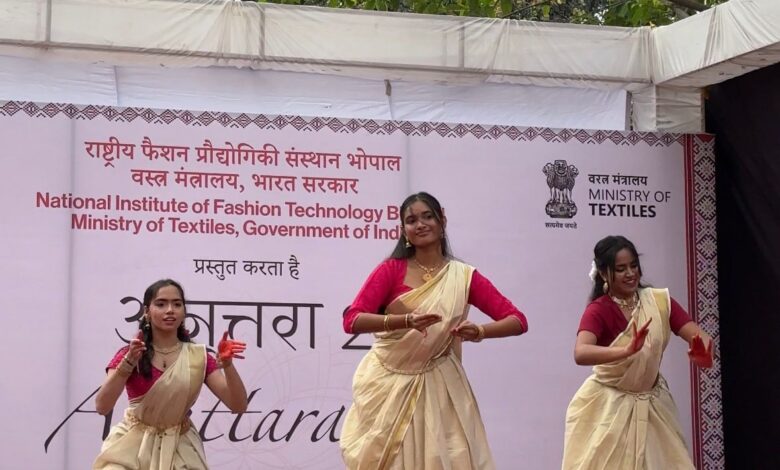
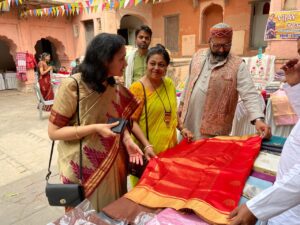
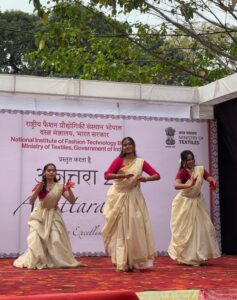
The celebrations extended to Gauhar Mahal on February 27 with the opening of the public Craft Bazaar. A total of 44 stalls were demonstrated. The event commenced with a traditional Ganesh Vandana performed by students of the Accessory Design department. Following the ceremonial inauguration, the Chief Guest Mrs. Sonali Ponkshe Vayangankar, IAS, Principal Secretary, Social Justice & Empowerment of Persons with Disabilities Department remarked, “As students move towards modernity, they must carry forward our traditions and cultural values alongside.” The Guest of Honour, Shri Madhan Bibhishan Nagargoje, IAS, Commissioner, Handicrafts and Handlooms also graced this exhibition with his presence.
Dr. Debojyoti Ganguly, Campus Academic Coordinator (CAC), highlighted the deep-rooted legacy of Indian crafts, stating, “India’s handcraft tradition dates back more than 3,000 years. Handloom and handicrafts have been sustainable in nature since prehistoric times -entirely rooted in natural processes and materials.”
Dr. Anupam Saxena, Associate Professor and Craft Initiative Coordinator (CIC), reiterated that crafts represent India’s living cultural heritage and highlighted that NIFT organizes such platforms without charging participation fees, enabling artisans to expand their professional reach.
In the evening, a special three-round fashion walk was organized. 25 NIFT students showcased garments and accessories crafted by participating artisans, including Chanderi sarees, Banarasi sarees, Tie-Dye ensembles, and handcrafted jewelry. The presentation highlighted the elegance and adaptability of traditional textiles in modern contexts.
– Artisan and Student Perspectives
Dharmendar Rohar, a State Awardee Bamboo Craft artisan, also shared his experience of conducting a 3 day workshop during the event. He trained approximately 20–30 students, guiding them through the intricacies of bamboo craftsmanship. Under his mentorship, a student Jayesh successfully created a mobile stand, while Roopam designed and crafted jewelry pieces. The workshop saw particular interest in jewelry-making, especially earrings, rings, and bracelets.
Rajkumar Pandey, a National Awardee block-printing artisan from Jaipur–Sanganer, described his first visit to NIFT Bhopal as enriching. He emphasized that interacting with design students provided valuable exposure while allowing artisans to share generational knowledge.
Student Palak Singh Bais shared that attending her first craft bazaar deepened her understanding of traditional crafts and strengthened her appreciation of their relevance in modern design education.
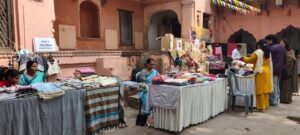
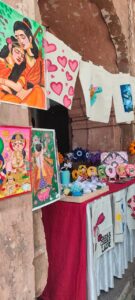
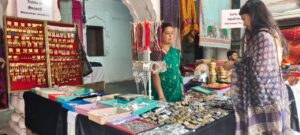
Visitors explored stalls displaying handcrafted textiles, weaves, prints, pottery, and regional crafts, engaging directly with artisans and supporting their work. The bazaar will conclude on February 28, inviting the citizens of Bhopal to celebrate and promote India’s vibrant craft traditions.
The event’s success was made possible through the guidance of Mr. Akhil Sahai, the Director, and coordinated efforts of Dr. Anupam Saxena, Craft Initiative Coordinator (CIC), Dr. Debojyoti Ganguly, Campus Academic Coordinator (CAC) , the Student Development and Activity Council (SDAC), faculty members across departments, the Textile Design Department, volunteers, staff, students and the enthusiastic participation of artisans.
Through Anuttara – Craft Bazaar 2026, National Institute of Fashion Technology Bhopal strengthened its role as a bridge between traditional knowledge systems and contemporary design practice, ensuring that India’s craft heritage continues to thrive for generations to come.
The initiative brought together heritage, education, and community engagement, reaffirming the institute’s commitment to preserving and promoting India’s rich craft legacy.