Over five crore Indians lead world’s largest mobilisation against child marriage
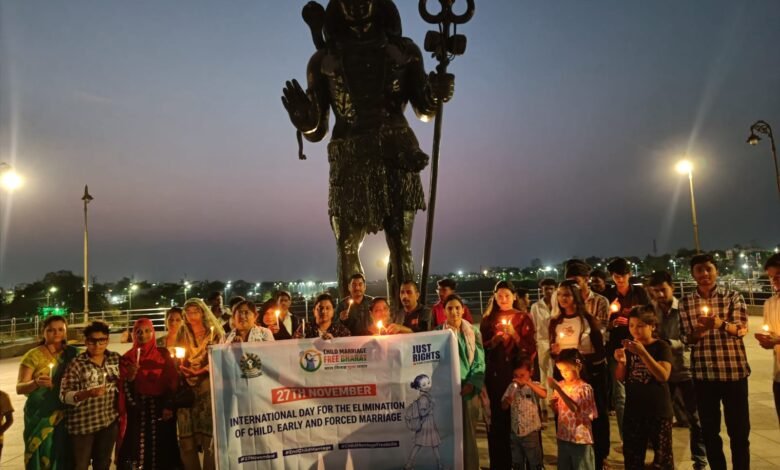
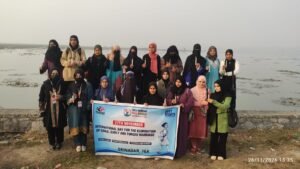
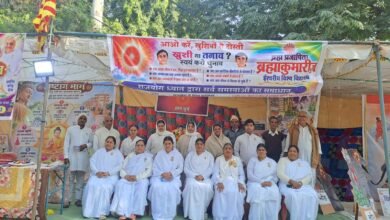
More than five crore people, led by over five lakh women leaders and survivors, participated in torchlight processions, candle marches, prabhat pheris, awareness programmes and pledge-taking events organised across the country by Just Rights for Children and its partners to observe the International Day for the Elimination of Child, Early and Forced Marriage for the first time in a nationwide mobilisation against child marriage. Special programmes were also conducted in 1.33 lakh vulnerable villages with a high prevalence of child marriage.
The designation of November 27 as the International Day for the Elimination of Child, Early and Forced Marriage marks a global achievement for India as it was on this day in 2024 that the Women and Child Development Ministry, under the leadership of Prime Minister Narendra Modi, launched the campaign for ‘Bal Vivah Mukt Bharat’ (BVMB). In the last two years, the government has been holding special campaigns to raise awareness among people against child marriage, with JRC supporting these efforts through its work on the ground across the country.
Just Rights for Children, India’s largest civil society network working for the protection of children, and its over 300 NGO partners working in all 782 districts of the country have prevented over 6.5 lakh child marriages over the past three years. These efforts have led to a significant decline in child marriage prevalance. Child marriage has declined 3.2% between 2019-21 and 2023-24 according to National Family and Health Surveys, and in keeping with the government’s goal, child marriage has dropped by 10% in 2026.
Bhuwan Ribhu, the founder of Just Rights for Children, said, “International Day for the Elimination of Child, Early and Forced Marriage is an important day for humanity as a movement that started in India, led by our sisters, daughters and mothers, has now become a global call to action. Child marriage is child rape and has no place in society. By stopping and preventing more than 650,000 child marriages, a movement led by over 500,000 survivors and women leaders, India has shown that change is possible and every country now needs to act decisively to create a child marriage-free world by 2030.”
Bhuwan Ribhu had initiated the international call for a dedicated global day to end child marriage. In March 2026, during his address at the United Nations, he reiterated the call in the presence of international leaders. Subsequently, 84 nations, including India, sponsored the resolution, which the UNGA unanimously adopted on September 4, 2026, establishing November 27 as the International Day for the Elimination of Child, Early and Forced Marriage.
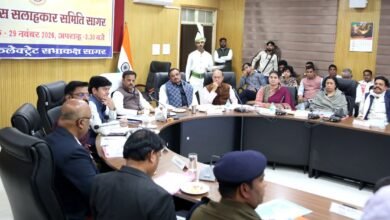
At programmes commemorating the day, child marriage survivors were felicitated across districts, where they shared their stories, inspiring young girls and their families with their courage and determination. Faith leaders from different religions also took a collective pledge against child marriage. Confectioners, cooks, decorators, band and music operators, tent service providers, and printing press owners who print wedding invitations also took an oath not to be involved in any child marriage and to immediately inform the authorities if they came across any information about a child marriage anywhere. Bal Vivah Mukti Raths were also launched to travel to various areas, sharing slogans and messages against child marriage. These events, conducted by Just Rights for Children in collaboration with central and state governments, district administrations and other agencies, were attended by MPs, MLAs, district magistrates and superintendents of police.
The coming together of all stakeholders has given new momentum to the fight against child marriage. Just Rights for Children and its partners are working shoulder to shoulder with the government, gram panchayats, children and women to end child marriage in the country by 2030.
The latest national data reflects a decline in child marriages brought about by awareness programmes and other initiatives launched on the ground. According to the National Family Health Survey-6 (2023-24), 20.1% of women aged 20-24 were married before the age of 18. This is an improvement upon the NFHS-5 (2019-21) which reported 23.3% such marriages. The global commitment to eliminate child marriage by 2030 is aligned with Target 5.3 of Sustainable Development Goal 5 (Gender Equality) which calls for the elimination of all harmful practices, including child, early and forced marriage.